
An inspection by the Norwegian Food Safety Authority is usually not announced. The inspector will see how you work with your internal control: which points you check, what the measurements have been, and what you did when something went wrong. The answer «it’s in a binder in the office» is of little value if the binder isn’t up to date.
Overview in one place
The food safety dashboard shows today’s status: how many tasks have been completed, open deviations, number of control points, and active routines. With multiple workplaces, you can view all of them together or one at a time.

The control point register is the foundation: what you measure, where it’s located, and which limits apply. This is often the first thing the inspector asks for.

History is the documentation
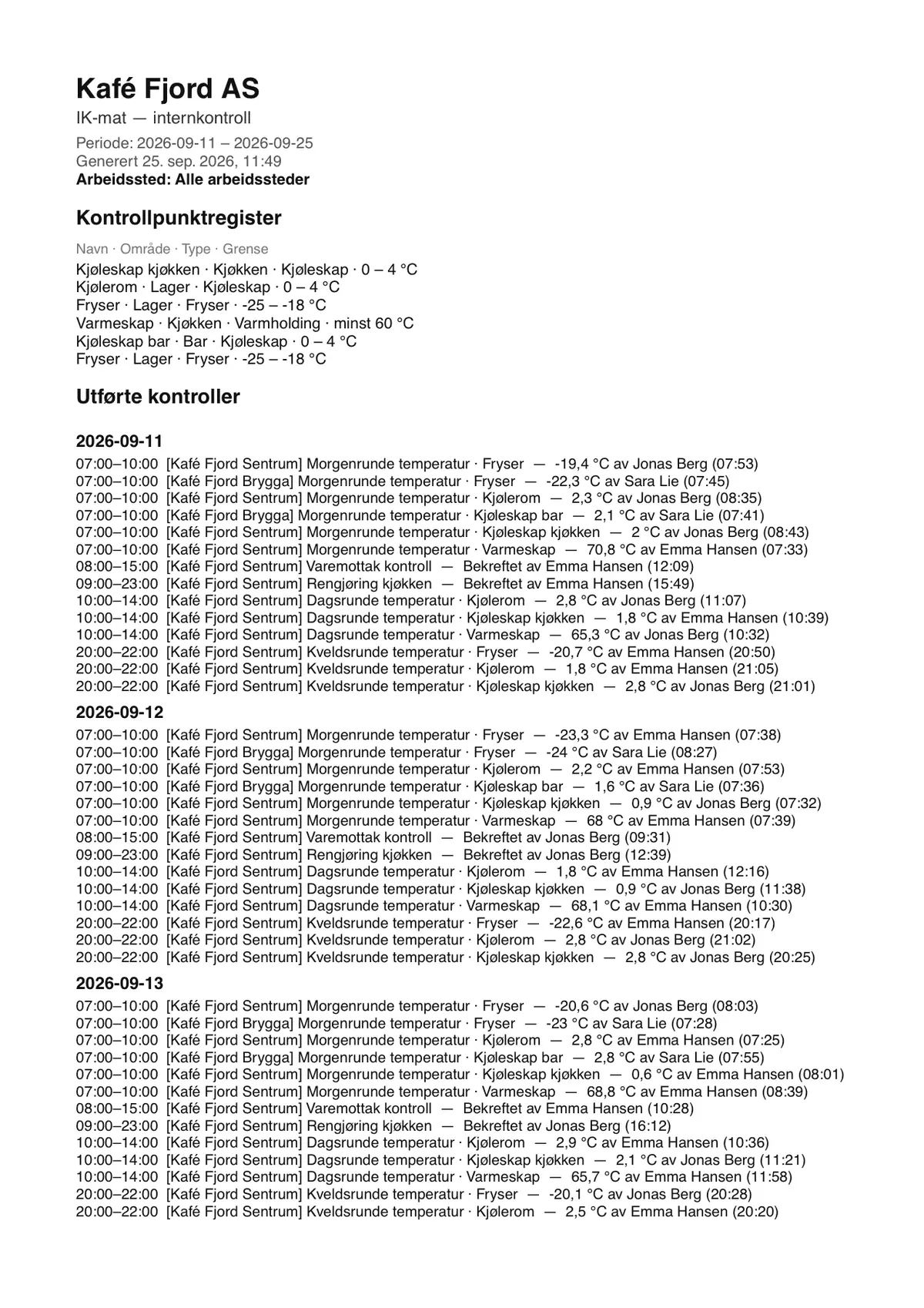
Under History, you’ll find all controls, day by day: time window, workplace, routine, measured value, and who performed it, including the time. Measurements outside the limit are marked in red, and rounds that weren’t completed are listed as not performed. Nothing can be entered retroactively without being visible.

PDF report in seconds
Click «Export PDF», select the period and, if applicable, the workplace, and you’ll have a report ready to show or print. The report includes the control point register, all completed controls, and all deviations in the period, along with corrective actions. The Norwegian Food Safety Authority inspects one location at a time, so the report can be limited to the location the inspector is visiting.
Multiple workplaces, one system
If you have multiple cafés or shops, food safety uses the same workplaces as the duty roster. Employees see the rounds for their own location, and managers can monitor all locations from their phones.


Notifications can be sent to the managers at the relevant location. If a round is missed at Brygga, it’s the manager there who receives the notification, not everyone.
Checklist before the next inspection
- Control points are updated. New refrigerators have been added, and old ones archived.
- Routines cover what you actually do. Temperature, goods receipt, and cleaning.
- No old open deviations. All deviations have a corrective action.
- You know where the report is. History → Export PDF.
Good internal control isn’t just more paperwork. It’s ensuring that what you’re already doing is automatically recorded.


